Loading...

Our Service

Materials & processes for lightweight structures

We support programmes across fiber-reinforced polymers, moulded sheet compounds, pultruded profiles, thermoformed parts, and additive manufacturing—aligned to mobility, rail, and industrial applications.

Whether you need material selection guidance, process definition, or design-for-manufacture input, we help you translate requirements into robust composite solutions.

  • FRP — glass- and carbon-reinforced polymer systems
  • SMC — compression moulding of complex shapes
  • Pultrusion — constant cross-section FRP profiles
  • Vacuum forming — thermoplastic sheet to detailed forms
  • 3D printing — additive builds from CAD / digital models
Discuss composite manufacturing
Engineers and technicians on a production floor—composite and industrial manufacturing context
Manufacturing
Materials

FRP

FRP most commonly refers to Fiber-Reinforced Plastic (a composite material).

It is a high-strength, lightweight composite material made of polymer reinforced with fibers (glass, carbon).

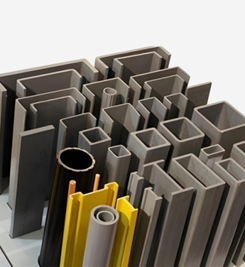
Fiber-reinforced plastic (FRP/GRP) structural profiles: C-channels, box sections, round tubes, I-beams, and angles in industrial finishes
FRP
Moulding

SMC

Sheet Moulding Compound (SMC) is a ready-to-mold, fiber-reinforced thermoset material—typically polyester, vinyl ester, or epoxy resins—combined with glass or carbon fibers in a pliable sheet form.

It is widely used in compression molding for high-strength, complex-shaped, and lightweight components, particularly in the automotive, transportation, and industrial sectors.

Industrial plant and machinery—compression moulding and high-volume production environment suited to SMC components
Compression moulding
Continuous profiles

Pultrusion

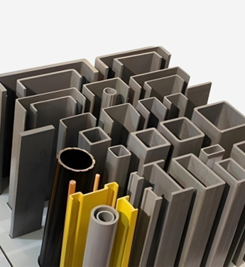
Pultrusion is a continuous, automated manufacturing process used to produce high-strength, fiber-reinforced polymer (FRP) composites with constant cross-sections.

Variety of pultruded FRP profiles standing on end: channels, box sections, pipes, and structural shapes
Pultruded FRP
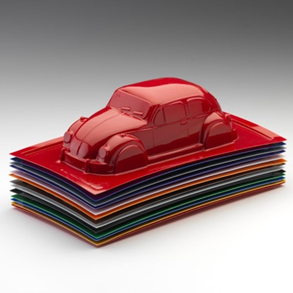
Vacuum-formed thermoplastic: red sheet moulded into a detailed car relief on a stack of flat coloured sheets
Vacuum forming
Thermoforming

Vacuum forming

Vacuum forming is a widely used thermoforming process that heats a thermoplastic sheet until it is pliable, then stretches it over a single-surface mold (male or female) and uses vacuum suction to create detailed shapes.

Additive

3D Print

3D printing, also called additive manufacturing, is the construction of a three-dimensional object from a CAD model or a digital 3D model.

Fused filament fabrication: close-up of a desktop 3D printer building a plastic part layer by layer
Additive

Need composite manufacturing support?

Share your material, process, or part requirements and we will respond with a practical path forward.